.png?width=357&height=85&name=tpiq-logo%20(375x85).png "TaxPlanIQ")


.png?width=800&name=Blog%20Header-%20Tax%20Filing%20Deadline%202026%20What%20Every%20Tax%20Professional%20Needs%20to%20Know%20(1).png)
Tax Planning Software for Solo Accountants
Quick Answer Summary For a solo accountant taking on a first paid tax planning engagement, the best software is one that...
Read MoreEvery tax season, accountants and tax professionals brace themselves for the annual rush. The tax filing deadline looms, clients scramble to send in last-minute documents, and the pressure mounts. But what if this wasn't just about compliance?
What if the next tax filing deadline was an opportunity, not just an obligation?
Instead of focusing solely on meeting the deadline, accountants can use this season to strengthen client relationships, build trust, and introduce high-value advisory services that set them apart. In this blog, we'll cover everything you need to know about the 2026 filing deadlines, the OBBBA-driven changes reshaping this filing season, strategies to avoid the last-minute rush, and how proactive tax planning can transform your firm's revenue and efficiency.
The short answer for individuals: 2025 returns were due April 15, 2026, and anyone who filed Form 4868 has until October 15, 2026. Looking ahead, 2026 returns are due April 15, 2027. A firm with business clients may be tracking several separate deadlines across the same client relationship, and the pass-through dates land a full month before the 1040. Here's the complete federal calendar for calendar-year filers.
|
Filer |
Form |
Original deadline |
Extension form |
Extended deadline |
|
Individuals, sole proprietors, single-member LLCs |
1040, 1040-SR |
April 15, 2026 |
4868 |
October 15, 2026 |
|
Partnerships, multi-member LLCs taxed as partnerships |
1065 |
March 16, 2026 |
7004 |
September 15, 2026 |
|
S corporations |
1120-S |
March 16, 2026 |
7004 |
September 15, 2026 |
|
C corporations |
1120 |
April 15, 2026 |
7004 |
October 15, 2026 |
|
Estates and trusts |
1041 |
April 15, 2026 |
7004 |
September 30, 2026 |
|
Tax-exempt organizations |
990, 990-EZ, 990-PF |
May 15, 2026 |
8868 |
November 16, 2026 |
|
Employee benefit plans |
5500 |
July 31, 2026 |
5558 |
October 15, 2026 |
|
Gift tax returns |
709 |
April 15, 2026 |
8892, or 4868 with the 1040 |
October 15, 2026 |
|
Foreign bank account reports |
FinCEN 114 |
April 15, 2026 |
None required |
October 15, 2026 |
Two dates on that table look wrong at first glance and aren't. March 15, 2026 fell on a Sunday, which pushed partnership and S corporation returns to Monday, March 16. The extended date stayed at September 15. And November 15, 2026 falls on a Sunday, which pushes extended nonprofit returns to Monday, November 16.
Trusts are the row that catches firms. Form 1041 gets a 5½-month extension, not six, so extended fiduciary returns are due September 30, two weeks ahead of the 1040s and 1120s sitting in the same October pile.
Form 990-N generally follows the same 15th-day-of-the-fifth-month filing deadline as other exempt-organization returns, but its deadline cannot be extended.
|
Filer |
Form |
Original deadline |
Extended deadline |
|
Individuals, sole proprietors, single-member LLCs |
1040, 1040-SR |
April 15, 2027 |
October 15, 2027 |
|
Partnerships, multi-member LLCs taxed as partnerships |
1065 |
March 15, 2027 |
September 15, 2027 |
|
S corporations |
1120-S |
March 15, 2027 |
September 15, 2027 |
|
C corporations |
1120 |
April 15, 2027 |
October 15, 2027 |
|
Estates and trusts |
1041 |
April 15, 2027 |
September 30, 2027 |
|
Tax-exempt organizations |
990, 990-EZ, 990-PF |
May 17, 2027 |
November 15, 2027 |
|
Employee benefit plans |
5500 |
August 2, 2027 |
October 15, 2027 |
|
Gift tax returns |
709 |
April 15, 2027 |
October 15, 2027 |
|
Foreign bank account reports |
FinCEN 114 |
April 15, 2027 |
October 15, 2027 |
May 15, 2027 falls on a Saturday and July 31, 2027 falls on a Saturday, which moves nonprofit returns to Monday, May 17 and Form 5500 filings to Monday, August 2.
Quarterly installments run on a different clock, and the C corporation schedule doesn't match the individual one in the fourth quarter.
|
Installment |
Individuals, estates, trusts |
Calendar-year C corporations |
|
First |
April 15, 2026 |
April 15, 2026 |
|
Second |
June 15, 2026 |
June 15, 2026 |
|
Third |
September 15, 2026 |
September 15, 2026 |
|
Fourth |
January 15, 2027 |
December 15, 2026 |
With all of this in mind, as always, there are a few exceptions:
Tax Extensions: If more time is needed, taxpayers can file for an extension (Form 4868), granting them six additional months to submit their return. But remember, this does not extend the time to pay taxes owed. Any outstanding balance is still due by April 15 to avoid penalties and interest. For clients on extension right now, October 15, 2026, is the date circled on the calendar.
Disaster Relief Extensions: The IRS may postpone filing and payment deadlines for taxpayers affected by federally declared disasters. Relief periods and eligible locations vary, so check the IRS disaster relief page before determining a client's deadline.
Knowing these details allows accountants to better guide their clients and keep them compliant on time.
Each tax season brings regulatory adjustments that can impact how accountants file returns. The 2026 tax season is no exception, and this one is bigger than most: it's the first filing season under the One Big Beautiful Bill Act (OBBBA), signed July 4, 2025, which changed the numbers on 2025 returns retroactively:
OBBBA increased the standard deduction for 2025, affecting returns filed during the 2026 filing season. The basic standard deduction is:
Looking ahead to tax year 2026, those amounts rise to $16,100, $32,200, and $24,150, respectively. This means some clients may see lower taxable income, which presents an opportunity for accountants to help them optimize their deductions.
The IRS introduced Schedule 1-A for the 2026 filing season to claim four new OBBBA deductions on 2025 returns: the deduction for qualified tips, the deduction for qualified overtime pay, the car loan interest deduction, and the enhanced deduction for seniors. Clients in tipped industries, hourly workers with heavy overtime, and retirees will have questions their DIY software may not answer well, which makes this a natural advisory conversation.
The long-threatened $600 threshold for third-party payment platforms (PayPal, Venmo, eBay) never took effect. OBBBA repealed it retroactively and permanently restored the original standard: more than $20,000 in gross payments and more than 200 transactions. Fewer clients will receive a 1099-K this season, but the trap runs the other direction now. Income is still taxable whether or not a form arrives. Some states also have 1099-K reporting thresholds that are lower than the federal threshold, so practitioners should check the applicable state's requirements. Clients who stopped tracking platform income when the form stopped coming will need a reminder.
The IRS shut down its Direct File program, and it is not available for the 2026 filing season. Taxpayers who used the free government-run tool in its 25 pilot states will need a new way to file: IRS Free File, commercial software, or a preparer. For firms, this means new questions from former Direct File users. A modest wave of simple-return clients is a foot in the door for planning conversations.
Clients with income that isn't fully covered by withholding may need to make quarterly estimated tax payments. Missing or underpaying those installments can result in an underpayment penalty, with the applicable rate changing quarterly.
This makes year-round projections especially valuable for business owners, real estate investors, and self-employed clients whose income can change significantly throughout the year.
For clients claiming the $7,500 EV tax credit, this is the final season it appears on returns. OBBBA terminated the clean vehicle credits for vehicles acquired after September 30, 2025, so purchases made on or before that date can still be claimed on 2025 returns, with the usual IRS documentation requirements. Accountants must confirm clients provide the necessary purchase verification to claim this benefit before it's gone for good.
.png?width=350&height=350&name=Busy%20Season%20Is%20Your%20Best%20Sales%20Season%20Mockup%20(1).png) Get the guide that shows you exactly how to turn a return into a revenue-generating advisory conversation here.
Get the guide that shows you exactly how to turn a return into a revenue-generating advisory conversation here.
For many firms, tax season is a reactive process: gathering documents, meeting deadlines, and processing returns. But top-performing accountants know that tax season is about more than just compliance.
Proactive tax planning is the key to year-round revenue growth and client retention. Instead of simply filing taxes, the best firms use this time to:
And this year, the OBBBA gives planning conversations real substance: permanent 100% bonus depreciation, a permanent QBI deduction, the raised SALT cap, and the new individual deductions all create moves worth making before year-end, not discoveries made at filing time.
With the right approach, the tax filing deadline becomes the start of deeper client relationships and higher-value services.
Don't wait until March. Start reminding clients in January to gather documents. Sending automated reminders can significantly cut down on last-minute filings.
The IRS processes millions of returns, and backlogs are inevitable. Early filing means:
Firms using secure online document portals to collect tax documents see faster turnaround times and fewer missing forms, saving hours of back-and-forth emails.
Instead of scrambling every April, work with clients year-round to:
Filing tax returns is only one part of what accountants do, but tax planning is where firms can truly differentiate themselves and add value.
That's where TaxPlanIQ comes in. This tax planning software helps accountants, EAs, and financial advisors:
Instead of just meeting the tax filing deadline, TaxPlanIQ helps accountants move beyond compliance and into advisory services, creating higher revenue, deeper client relationships, and a less stressful tax season.
Ready to transform your firm? Book a demo of TaxPlanIQ today.
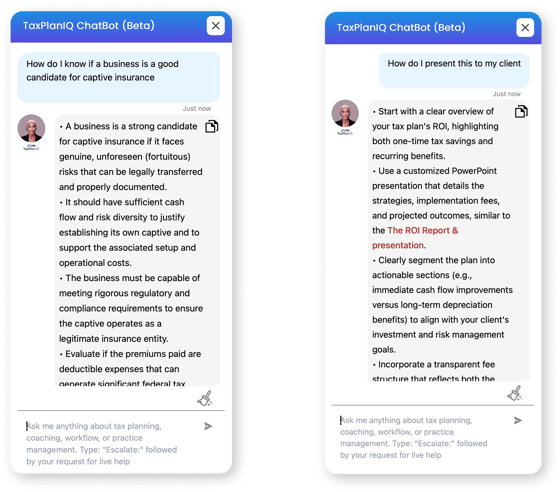
TaxPlanIQ has conversational AI that explains tax strategies in plain English.

Interviews, tips, guides, industry best practices, and news.
Quick Answer Summary For a solo accountant taking on a first paid tax planning engagement, the best software is one that...
Read MoreTax planning as an RIA service Adding tax planning to an RIA means adding a forward-looking service that reviews a clien...
Read MoreQuick Answer Summary TaxPlanIQ is tax planning software that turns a client's 1040 into a client-ready proposal showing ...
Read MoreThe best tax projection software options for most firms in the United States are softwares that answer client questions....
Read MoreQuick Answer Summary To build a tax plan for an S corp owner, set a defensible reasonable salary first, then stack three...
Read More
.png?width=800&name=Blog%20Header-%20Which%20Software%20Shows%20Clients%20How%20Much%20Tax%20They%20Could%20Save%20(1).png)