



How Financial Advisors Can Offer Tax Planning Without Preparing Returns
Quick Answer Summary Financial advisors can help clients evaluate tax decisions without preparing their returns. Tax pla...
Read MoreCapital gains taxation can significantly impact the financial goals of individuals and businesses. Whether it’s selling appreciated assets, divesting from real estate, or liquidating investments, capital gains taxes are unavoidable unless strategic planning is employed. For tax professionals and accountants, helping clients navigate these complexities is an opportunity to deliver real value while saving them money.
In this blog, we’ll explore actionable deferral and elimination strategies for capital gains, the latest regulatory updates for 2026, and how leveraging tools like TaxPlanIQ can make implementing these strategies more effective.
Capital gains represent the profit realized from selling an asset for more than its purchase price. These assets can include stocks, bonds, real estate, or even businesses. Taxation of these gains varies based on the holding period:
Capital gains taxes can significantly erode investment returns if not carefully managed, making tax planning essential for maximizing wealth preservation and growth.
Deferral strategies allow taxpayers to postpone capital gains taxes, providing more liquidity and enabling reinvestment opportunities. While QSBS, Opportunity Zones, 1031 exchanges, and deferred annuities offer powerful opportunities for tax savings and investment growth, they are complex strategies that require careful planning and a clear understanding of potential risks to fully realize their benefits.
The 1031 exchange, also known as a like-kind exchange, allows real estate investors to defer capital gains taxes when they sell a property and reinvest the proceeds into another qualifying property. This strategy is particularly valuable for real estate investors seeking to upgrade their portfolios or shift to more lucrative markets without incurring immediate tax liabilities.
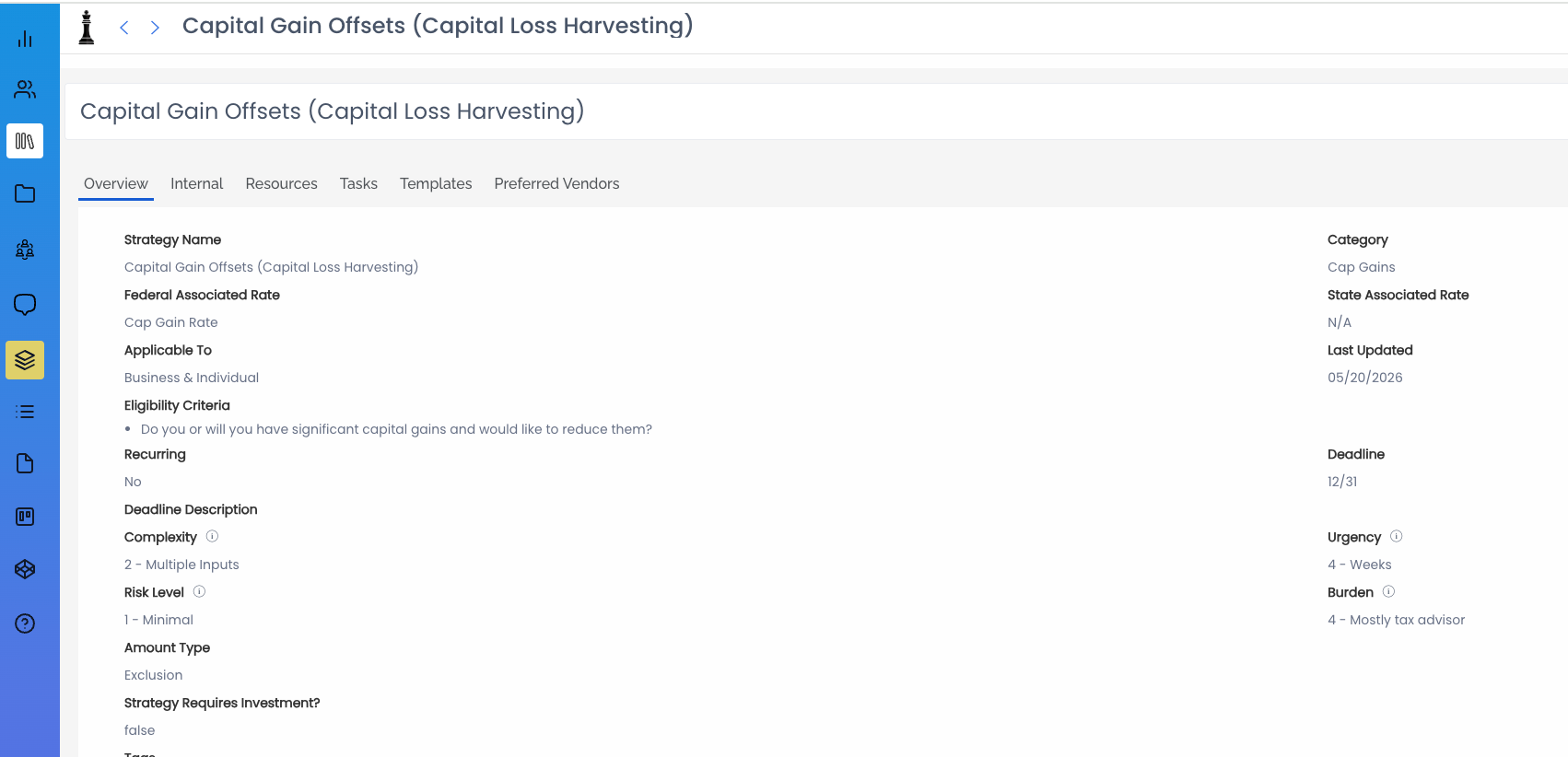
Accountants and financial advisors can use TaxPlanIQ to help save clients money on taxes with over 130 advanced strategies, including Capital Gains Offsets.
Opportunity Zones, created under the Tax Cuts and Jobs Act (TCJA), incentivize investment in economically distressed areas. By investing capital gains into a Qualified Opportunity Fund (QOF), taxpayers can defer their tax liabilities.
Benefits:
For business owners and real estate investors, installment sales allow gains to be spread over multiple years by structuring payments into installments.
Advantages:
A deferred sales trust is a variation of the installment sale that uses an independent trustee between the seller and the buyer.
For clients looking for predictable income streams in retirement, deferred annuities offer an opportunity to grow investments tax-deferred. Although withdrawals are eventually taxed, the growth benefits from compounding without an immediate tax impact.
Elimination strategies focus on completely avoiding capital gains taxes under specific circumstances. While less common, they offer unparalleled benefits when applicable.
Section 1202 of the Internal Revenue Code provides a significant tax advantage for Qualified Small Business Stock (QSBS). Investors holding QSBS for more than five years may exclude up to 100% of the gains from federal taxes. For stock issued after July 4, 2025, the OBBBA added a partial exclusion: 50% after three years, 75% after four years, and 100% after five years, and raised the per-company exclusion cap from $10 million to $15 million.
When heirs inherit appreciated assets, the cost basis is “stepped up” to the asset’s fair market value at the date of death. This eliminates any capital gains tax on appreciation that occurred during the original owner’s lifetime.
Tax professionals should be aware of recent legislative updates impacting capital gains planning:
Staying informed is critical for leveraging new opportunities and avoiding compliance pitfalls.
Managing capital gains strategies can be complex, but tools like TaxPlanIQ make it easier for tax professionals to deliver high-value advisory services.
Here’s how:
TaxPlanIQ’s user-friendly platform empowers tax professionals to confidently navigate capital gains planning while saving clients time and money.
 Download for free How to Mitigate Large Capital Gains from Real Estate Sales: A Guide for Tax Advisors
With the right mix of deferral and elimination strategies, tax professionals can turn capital gains challenges into opportunities for their clients. By staying informed on the latest updates and leveraging tools like TaxPlanIQ, you can deliver impactful solutions that optimize tax liabilities and drive long-term financial success.
To see how TaxPlanIQ can support your firm’s growth while delivering measurable value to clients, sign up for a free demo today.

Interviews, tips, guides, industry best practices, and news.
Quick Answer Summary Financial advisors can help clients evaluate tax decisions without preparing their returns. Tax pla...
Read MoreQuick Answer Summary Can ChatGPT or Claude Replace Tax Planning Software? No. ChatGPT and Claude are useful for explaini...
Read MoreQuick Answer Summary Start with the client’s most recently filed 1040 to identify potential planning opportunities. Conf...
Read MoreQuick Answer Summary For a solo accountant taking on a first paid tax planning engagement, the best software is one that...
Read MoreTax planning as an RIA service Adding tax planning to an RIA means adding a forward-looking service that reviews a clien...
Read More